 AI
AIHow to read an AI free tier before you sign up
A free tier is a contract written as a brochure. The headline tells you what the vendor wants you to feel; the footnotes tell you what you will actually get. This note is a reading order for the pricing page, built from the 22 documentation reviews on this site, all checked on October 7, 2026. It will not tell you which tool to pick. It will tell you where the number you need is usually hiding, and what to do when the vendor has not published one.
Start with the unit, not the headline
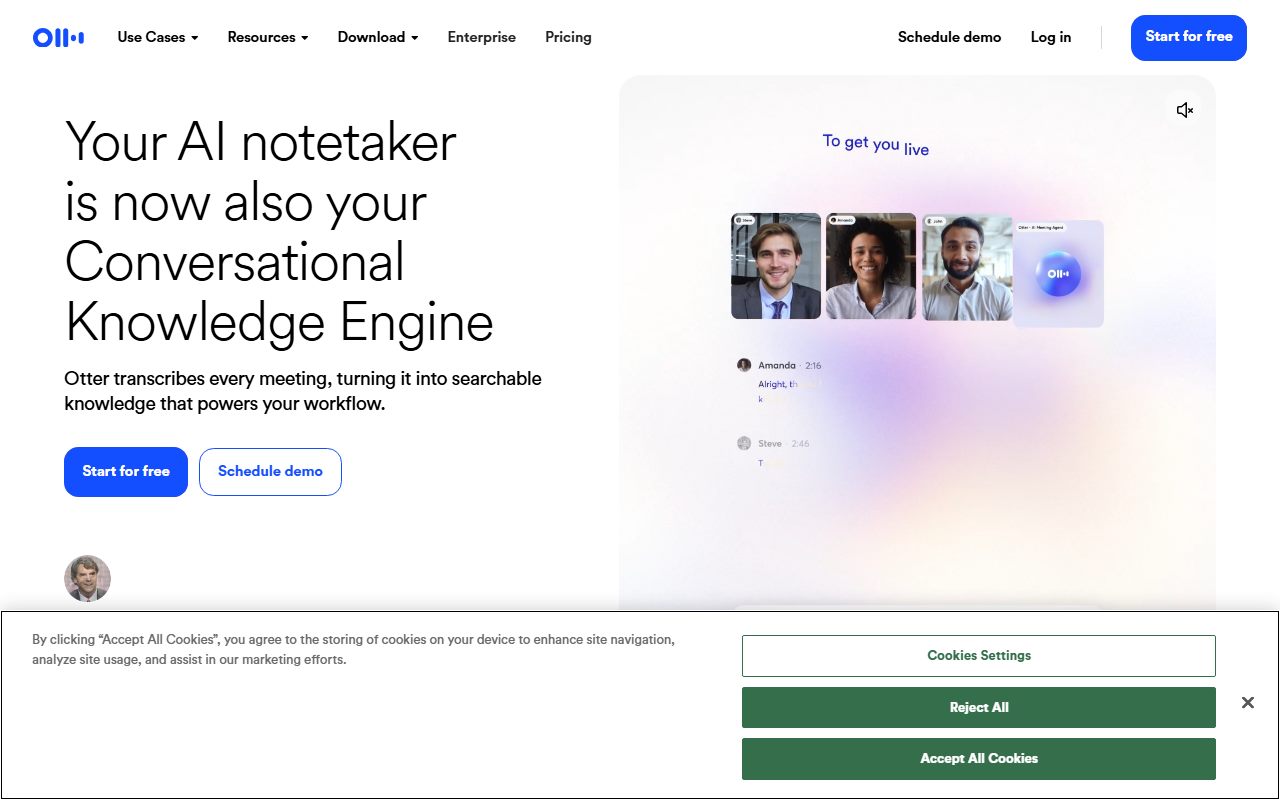
Every free tier meters something, and the first job is to find out what. The unit decides whether the plan fits your work, and vendors rarely use the same one. Otter.ai counts transcription minutes: 300 a month on the free Basic plan, with each conversation capped at 30 minutes, per the pricing page. QuillBot counts words per action: 125 for a paraphrase, 1,200 for a summary, per the help center. Descript counts media minutes, 60 a month, and the help centre is explicit that a file counts on upload whether or not you transcribe it. ElevenLabs counts characters dressed as credits: one character equals one credit on its V2 multilingual models, 10,000 a month on the free plan.
Then there are the vendors who meter the thing you expected to be free and leave the rest open. ChatGPT is the clearest example: the pricing page says text chat with the default model is unlimited, and then uses the word 'limited' seven times for uploads, images, voice, deep research, memory and the rest, with no number attached to any of them. The free tier is a full product for text and a sampler for everything else. If the unit the vendor meters is not the unit you care about, the free tier is more generous than it looks. If it is, read on.
Daily, weekly, monthly, or once
The second thing to find is the rhythm. Two plans with the same number can behave completely differently depending on when the number comes back, and this is where free tiers most often surprise people.
- Daily: Suno gives 50 credits a day, replenished on UTC per the help centre; Leonardo.Ai gives 150 fast tokens a day, resetting every 24 hours with no carry-over. These reward a daily habit and punish batch work.
- Weekly: Ideogram gives 30 credits a week, per its Plans and Credits documentation.
- Monthly: Canva estimates up to 20 pooled AI uses a month on Free; Grammarly gives 100 AI prompts a month, refilling on the anniversary of the day generative AI first became available in your account, not on the first of the month, per its support article; ElevenLabs gives 10,000 credits a month with no rollover on Free.
- Once, ever: Runway deposits 125 credits one time, and the help centre says they never expire; Gamma grants 400 credits at signup and the help centre states free credits do not refresh; Descript gives 100 AI credits one time only; Fireflies.ai describes its 20 AI credits as one-time on the billing page, though a help article says monthly.
The practical difference is enormous. A one-time grant is a trial with a long fuse; spend it on the feature you most need to judge, because it is not coming back. A daily allowance is a standing invitation to experiment a little every day, and useless for a single heavy afternoon. A monthly pool sits in between and is the easiest to exhaust by accident, which is why the public forum complaint about Canva, consistent with the vendor's own caveat about complex tasks, is that twenty uses go faster than twenty sounds.
The word 'limited' and what it is hiding
A surprising number of the largest vendors do not publish their free quantity at all. ChatGPT's seven 'limited' lines have no numbers. Claude's pricing page says there is no fixed message count because usage depends on the complexity of what you ask, and the help centre describes a session-based limit that resets every five hours with the number of messages varying by demand. Google Gemini publishes the shape of its limits in detail, compute-based, refreshing every five hours up to a weekly cap, and then describes paid tiers as 2x and 4x a standard quantity it never states. Microsoft Copilot's consumer site says only that some capabilities are subject to usage limits. Mistral Le Chat's pricing page describes free messages, searches and coding sessions as limited and stops there. Cursor's pricing page lists 'limited Agent requests' for its free Hobby plan, and the pricing documentation does not mention a free plan at all.
None of this is deception; it is a choice to keep the number adjustable. But it changes how you should read the page. When a vendor publishes a quantity, you can plan around it from your desk. When a vendor publishes an adjective, the only measurement that exists is the one you take yourself, inside the app, on your real work. The advice this site gives on every such page is the same: run the free tier on a fortnight of genuine tasks before deciding anything, because the number you discover is the only one there is, and it may move.
Watermarks, branding and public galleries
For anything visual or audible, the next question is what the output looks like when it leaves the product, and who else can see it before it does. Descript's pricing page states that free exports are 720p with a watermark. Gamma's states that free output carries Gamma branding, removed on the first paid tier. Runway lists 'no watermarks' as a feature of its $15 Standard plan and says nothing about Free, which is the pricing-page way of saying the free output is marked; this site reads it that way while noting the page does not say so directly. Adobe Firefly's plan pages do not address a free watermark at all, so the honest answer there is that the vendor does not publish it.
Visibility is a separate and sharper question. Ideogram's documentation states that everything generated on the free plan is public, and that unpublishing requires a paid plan. Leonardo's pricing page lists creations as Public on Free and its help centre says private generation is only available to paid members. For a hobby image, that is a shrug. For a client's logo, an unreleased product or a colleague's face, it is the whole decision. There is a longer note on this at the watermark and commercial-use question.
Commercial rights
The free tier may let you make something and still not let you use it. ElevenLabs' pricing page lists no commercial license on Free, and the terms restrict free users to non-commercial purposes. Suno's pricing page lists no commercial rights and no monthly song downloads on Free, and its terms tie commercial use on paid plans to a permitted download, metered at 20 a month on Pro and 60 on Premier. Ideogram's FAQ refers the commercial question to its Terms of Service rather than answering it. Leonardo's help centre, by contrast, states that commercial use of generated images is permitted and that this applies to free users too, though public images on Free also grant the vendor a broad licence. If the output is going on an invoice, a product page or a monetised channel, find the licence line before you find the generate button.
Sign-in rules and the credit card
Most of the 22 products reviewed here need no card for the free tier, and several say so on the pricing page: Gamma, Cursor and tl;dv all state no credit card is required. The trap is not the card; it is the sign-in method. Ideogram's documentation is the strongest example.
Free accounts get 30 credits each week if they sign in with Google, Apple or Microsoft.
That sentence comes from the Plans and Credits page at docs.ideogram.ai, checked October 7, 2026, and the same page states that accounts created with an email address and password receive no free credits at all. The decision you make on the sign-up screen decides whether the free tier exists for you. Fireflies has a milder version: per its credits article, a new free account gets three transcription credits when signing up on the web, five through the Chrome extension and ten on mobile. Canva's FAQ notes that trial accounts get the same AI allowance as Free, with the full paid allowance only starting when the paid plan does. Read the sign-up conditions as carefully as the limits.
When the vendor's own pages disagree
It happens more than you would expect, and the right response is not to pick the number you like. Otter's pricing page says a free account sees its five most recent conversations; a help article last updated in December 2023 says 25. Grammarly's plans page says 2,000 AI prompts a month on Pro; a support article still live on the day of checking says 1,000 for Premium, which looks like a page that predates a rename. Gemini's subscriptions page and its usage-limits article described the free model line differently on the same day. Adobe's current plans page describes daily-refreshing free generations while an older help FAQ describes 25 credits expiring after a month. tl;dv's own blog posts quote two different Business prices.
The rule this site uses: the newer document wins, the pricing page outranks a help article, and the safer number is the one to plan with until the live page settles it. Where the disagreement could change your decision, that is a reason to wait a week and check again, not a reason to guess.
A reading order that takes ten minutes
- Find the unit: messages, credits, minutes, media minutes, words, characters, tokens.
- Find the rhythm: daily, weekly, monthly, or one time. Look for the words 'reset', 'refresh', 'roll over' and 'expire'.
- Find the number. If there is only an adjective, write down that there is no number and plan a two-week test.
- Read the paid tier's feature list for things like 'no watermarks', 'private', 'download' and 'commercial license'. Each one is a statement about what Free lacks.
- Find the visibility default for anything you generate: public, private, or not stated.
- Find the sign-up conditions: card, sign-in provider, platform.
- Open the privacy policy or data-controls page and find the training setting before the first real prompt.
- Note the date. Prices in this category move; every figure in this note is as of October 2026 and should be checked against the live page.
Bottom line
A free tier is not generous or stingy in the abstract; it is generous or stingy for your unit, your rhythm and your output. Read the metered unit first, the reset rhythm second, and the paid tier's feature list third, because that list is the clearest statement of what the free plan does not include. When a vendor publishes a number, plan around it. When it publishes an adjective, the free tier is a measurement you take yourself. Every review on this site follows this order, and the method page explains why none of them claim more than the documents support.