 AI
AI
Google Gemini
The assistant with the cheapest paid step in the category, and a free tier whose model access is documented to change in October 2026.
Scored on the published rubric, from documentation, pricing and verified user reports.
Best for: A small business already living in Gmail, Drive and Docs that wants Deep Research, image generation and a voice mode on a free plan, and would rather pay $4.99 for a little more than $20 for a lot more.
Verdict
This is a documentation review, not a walkthrough: no account was opened for this page and no screenshots were captured, so nothing here is a first-hand claim about what the interface looks like today. On the documented design, Gemini's free tier is broad and its paid ladder starts lower than any rival in this batch. The subscriptions page, checked October 7, 2026 with US pricing, lists image generation and editing, Deep Research, Gemini Live, Canvas, Gems, Gemini Notebook and 15 GB of storage on the free plan, with Google AI Plus at $4.99 a month doubling the usage limits and AI Pro at $19.99 quadrupling them. The complication is a support article on model availability that describes changes taking effect for users without a subscription on October 9, 2026, under which the table shows only the Flash-Lite model for accounts without a plan, alongside a move to compute-based limits that refresh every five hours up to a weekly cap. The two pages do not describe the free model line identically, and this review flags that rather than resolving it. Privacy terms are clearly documented: with activity saved, chats may be reviewed by humans, and reviewed chats can be kept for up to three years.
Visit Google Gemini
We have no affiliate relationship with this vendor. Link goes to the official site.
Where it is strong
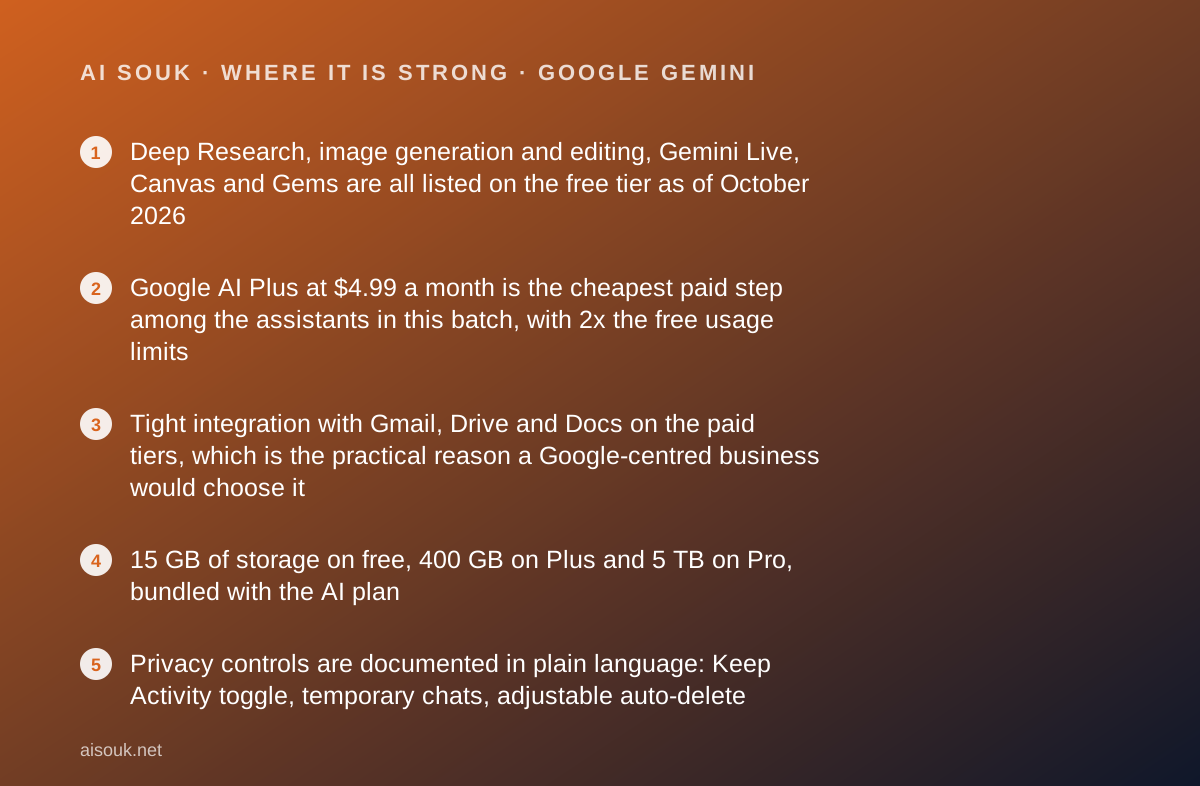
- Deep Research, image generation and editing, Gemini Live, Canvas and Gems are all listed on the free tier as of October 2026
- Google AI Plus at $4.99 a month is the cheapest paid step among the assistants in this batch, with 2x the free usage limits
- Tight integration with Gmail, Drive and Docs on the paid tiers, which is the practical reason a Google-centred business would choose it
- 15 GB of storage on free, 400 GB on Plus and 5 TB on Pro, bundled with the AI plan
- Privacy controls are documented in plain language: Keep Activity toggle, temporary chats, adjustable auto-delete
Where it falls short
- The free model line is documented inconsistently: the subscriptions page lists 3.6 Flash and varying 3.1 Pro access, while the usage-limits article's October table shows Flash-Lite only for accounts without a plan from October 9, 2026
- Usage limits are moving to a compute-based model refreshing every five hours up to a weekly cap, and the free quantity is not published as a number
- Deep Research is limited by daily request caps and concurrent-job restrictions on all plans, per the support article, with the Pro model reserved for paid plans
- With Keep Activity on, chats may be read by human reviewers and reviewed chats are retained up to three years even if you delete them
- Support is self-service through Google's general help pages; there is no dedicated desk for free or Plus users
What the free tier actually includes
The Gemini subscriptions page, checked October 7, 2026 with US pricing displayed, lists the free plan at $0 and describes it with a longer feature list than most rivals offer at that price: access to 3.6 Flash, varying access to 3.1 Pro, image generation and editing, Deep Research, Gemini Live for voice conversation, Canvas for working on documents and code, Gems for saved custom instructions, limited access to Google Flow with the Nano Banana Pro image model, Gemini Notebook for research and writing, and 15 GB of cloud storage shared across Gmail, Drive and Photos.
That is an unusually complete list. Deep Research in particular is a paid feature in several competing products, and here it is on the free plan, with the support article on Deep Research confirming that all signed-in users aged 18 and over can use it, subject to daily request limits and restrictions on how many research jobs run at once.
Now the complication. Google's support article on model availability and usage limits, also checked October 7, 2026, says that starting in October 2026 there are changes to model availability for personal accounts, taking effect for users without an AI subscription on October 9. The table in that article shows, for accounts without a plan, access to Flash-Lite only; Flash is marked for AI Plus and above, Pro for AI Pro and above, and Ultra and Deep Think for AI Ultra. The same article says earlier changes to limits and models took effect on May 17, 2026 for adults and July 24, 2026 for under-18s.
The subscriptions page and the support article therefore describe the free model line differently on the same day. This review does not know which will be true by the time you read it. Check both pages, and if you are evaluating the free tier for real work, do it after October 9.
- Image generation and editing, Deep Research, Gemini Live, Canvas, Gems, Gemini Notebook - per the subscriptions page
- 15 GB of storage shared with Gmail, Drive and Photos
- Model access on free: 3.6 Flash and varying 3.1 Pro per the subscriptions page; Flash-Lite only per the usage-limits table effective October 9, 2026
- Deep Research: daily request caps and concurrent-job limits on every plan, per the support article
What sits behind the paywall
Three paid tiers sit above free as of October 2026, and the first one is the cheapest paid step in this batch.
Google AI Plus, $4.99 a month, is described as 2x higher usage limits than free, with video generation and the Daily Brief, 200 Google Flow credits, more Audio Overviews and notebooks in Gemini Notebook, Gemini inside Gmail and Docs, and 400 GB of storage. Under the usage-limits table, Plus is also the first tier that lists the Flash model rather than Flash-Lite.
Google AI Pro, $19.99 a month, is 4x the free limits, 1,000 Flow credits, 5x more Audio Overviews, Deep Search and agentic capabilities inside Google Search, 5 TB of storage and a YouTube Premium Lite plan. The usage-limits table lists the Pro model from this tier up, and the Deep Research article says Pro and Ultra get higher daily report limits and access to the Pro model for reports.
Google AI Ultra starts at $99.99 a month for 5x the Pro limits, or $199.99 for 20x, with 10,000 or 25,000 Flow credits, Deep Think and Gemini Spark early access, Project Genie, 20 TB or more of storage and a full YouTube Premium plan. It is not a small-business plan and this page does not grade it.
The structure to notice is that the tiers are multipliers. The support article states that Plus is 2x the standard limits, Pro is 4x, and Ultra is 5x or 20x Pro. The standard limit itself - the free quantity - is not published as a number, and the article says Gemini is moving to compute-based limits that refresh every five hours until a weekly cap is reached, with usage depending on prompt complexity, the features used and chat length. Media generation, Deep Research, the Pro model, extended thinking and Deep Think are named as the features that consume more.
Prices here are US. The same page shows different local pricing in other regions; check yours.
Who it is for, and who should skip it
The free plan fits a Google-centred small business almost by default. If the company runs on Gmail, Drive and Docs, Gemini is the assistant that will eventually sit inside those apps, and the paid Plus tier at $4.99 is the lowest-cost way in this batch to get an assistant into your email and documents rather than beside them.
It also fits someone who wants the research and media features without paying. Deep Research, image generation and editing, and a voice mode on the free tier is a strong set, and the Deep Research article says reports can draw on Google Search, Gmail, Drive, uploaded files and NotebookLM notebooks as sources.
It is a poorer fit in three cases. If you need a strong model on the free tier, the October 9, 2026 table shows Flash-Lite only for accounts without a plan, which is the smallest model in the line; Flash needs Plus and Pro needs AI Pro. If you need predictable quantity, the limits are moving to a compute-based system with no published free number, and the heavier features - Deep Research, media, the Pro model - are the ones that spend it fastest. And if your work involves confidential material, the privacy section below describes human review and a three-year retention for reviewed chats that some businesses will not accept on a personal account.
For grounded answers from your own documents rather than an open assistant, NotebookLM is Google's other product and a different shape, covered separately on this site.
Limits and what users report
Gemini's documentation is more explicit than most about the shape of its limits and less explicit about the size. The support article says usage limits are compute-based, refresh every five hours until a weekly limit is reached, and are calculated from prompt complexity, the features used and the length of the chat. It names the expensive features: image, video and music generation, Deep Research, the Pro model, extended thinking and Deep Think. What it does not give is the standard allowance as a number, so the multipliers on the paid tiers are relative to a quantity you cannot see.
The Deep Research article adds that every plan has daily request limits and a cap on concurrent research jobs, and that a report typically takes five to ten minutes, longer for complex topics. Paid plans get higher daily limits and the Pro model; Ultra adds visuals and animations in reports, which the article says are unavailable when Workspace services are used as sources.
Public forum discussion in the months before this review clustered on two themes. The first is the sequence of changes: the article itself records limit and model changes in May and July 2026 and another in October, and users describe the free tier as a moving target. That matches the documents. The second is the gap between what the free tier promises in features and how quickly the heavy ones run out, which is exactly what a compute-based limit with unpublished quantities would produce.
The honest summary is that Gemini's free tier is wide in features and uncertain in quantity, and that as of October 2026 even the model you get is documented two ways. Read the usage-limits article on the day you decide, not this page.
Privacy and data use
Google's Gemini Apps privacy hub is clearer than most and the clarity cuts both ways.
With the Keep Activity setting on, your chats and the things you share - including audio, Gemini Live video and screen shares, feedback, information from websites visited through Gemini, product usage and location - are saved to Gemini Apps Activity. The hub states that human reviewers assess chats for quality and safety, that chats are disconnected from your account before being sent to service providers for review, and that your activity is used to improve Google's AI models. Your chats are not used to show you ads.
Retention is where a business reader should slow down. Standard activity auto-deletes after 18 months by default, adjustable to 3 or 36 months or indefinite. Chats that have been reviewed by a human are retained for up to three years, and the hub says this applies even after you delete them. With Keep Activity off, temporary chats are still kept for 72 hours so Gemini can respond, process feedback and protect Google, and the hub notes Google still uses your chats to respond to you and for protection even then.
The controls are two: turn off Keep Activity, or use temporary chats. Both are described in the hub and neither requires a paid plan.
The practical reading for a small business: a personal Gemini account with activity on is a place where a human may read what you typed and where reviewed content can outlive your deletion by years. For anything involving clients, employees or regulated material, that belongs on an organisational Workspace account with its own terms, and the decision belongs to whoever owns the risk. Read the current hub text at the tier you are on; it was last checked for this page on October 7, 2026.
Alternatives worth a look
ChatGPT is the direct comparison on the free tier. Its pricing page promises unlimited text chat with the default model and caps each other tool separately, where Gemini offers a longer free feature list metered by a single compute budget. ChatGPT's cheapest paid step is $8 against Gemini's $4.99, and ChatGPT's data controls do not involve a documented three-year retention for reviewed chats.
Claude is the comparison for organised work. Its free plan includes five projects, file creation and code execution, with a session-based allowance, and its first paid tier is $20. It has no equivalent of Gemini's storage bundle or Gmail integration, and no $4.99 rung.
Microsoft Copilot is the same idea from the other office suite: free to use with a Microsoft account, with the real integration arriving in the Microsoft 365 consumer plans from $9.99 a month. If your business runs on Outlook and Excel rather than Gmail and Sheets, that review is the one to read.
NotebookLM is Google's grounded alternative for working from your own documents, and Perplexity is the answer engine for questions with sources. Neither is trying to be a general assistant.
Frequently asked
Which model do free users get? As of October 7, 2026 the subscriptions page lists 3.6 Flash with varying access to 3.1 Pro, while the usage-limits article's table shows Flash-Lite only for accounts without a plan from October 9, 2026. Check both pages; this review cannot tell you which will apply when you read it.
Is Deep Research free? Yes, per the subscriptions page and the Deep Research article, for signed-in users 18 and over, with daily request limits and concurrent-job caps. Paid plans get higher daily limits and the Pro model.
How do the limits work? Compute-based, refreshing every five hours until a weekly cap, per the support article. Plus is 2x the standard limit, Pro 4x, Ultra 5x or 20x Pro. The standard limit is not published as a number.
What does Google AI Plus cost? $4.99 a month in the US as of October 2026, with 400 GB of storage and 200 Flow credits. Regional prices differ.
Are my chats read by people? With Keep Activity on, the privacy hub says human reviewers may assess chats, disconnected from your account, and reviewed chats are kept up to three years. Turning Keep Activity off or using temporary chats limits this.
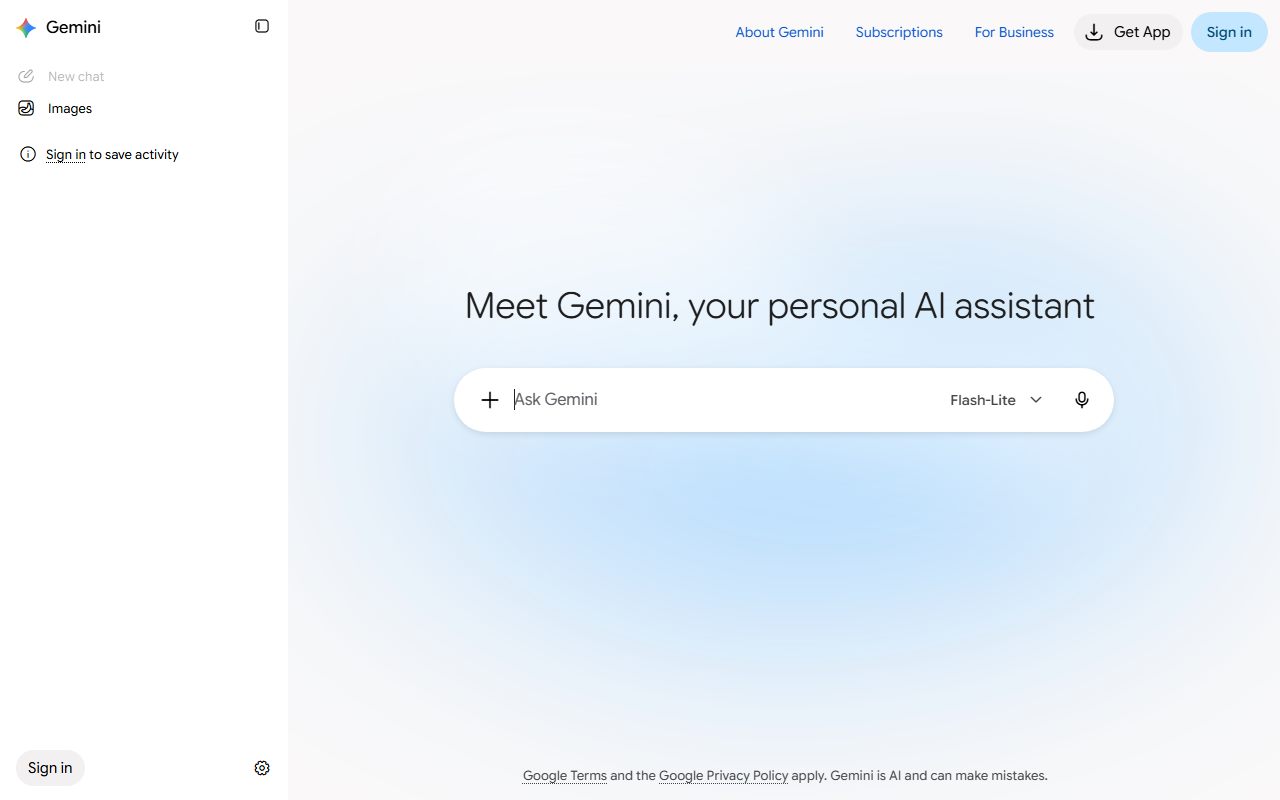
Why no screenshots? Because no account was opened for this page. That is what a documentation review means on this site.
Does this page earn a commission? No. There is no affiliate relationship with Google; the link goes to the official site.
Bottom line
On the documents, Gemini offers the longest free feature list and the cheapest paid step of any assistant in this batch, and it pairs them with the least settled picture of what a free user actually gets. Deep Research, image generation, voice, Canvas and Gems on a free plan is a strong offer; a $4.99 tier that doubles the limits and brings 400 GB of storage is a genuinely low first step. Against that, the model line for free accounts is documented two different ways as of October 7, 2026, the limits are moving to a compute budget with no published quantity, and the privacy hub describes human review and multi-year retention that a business should read before using a personal account for work.
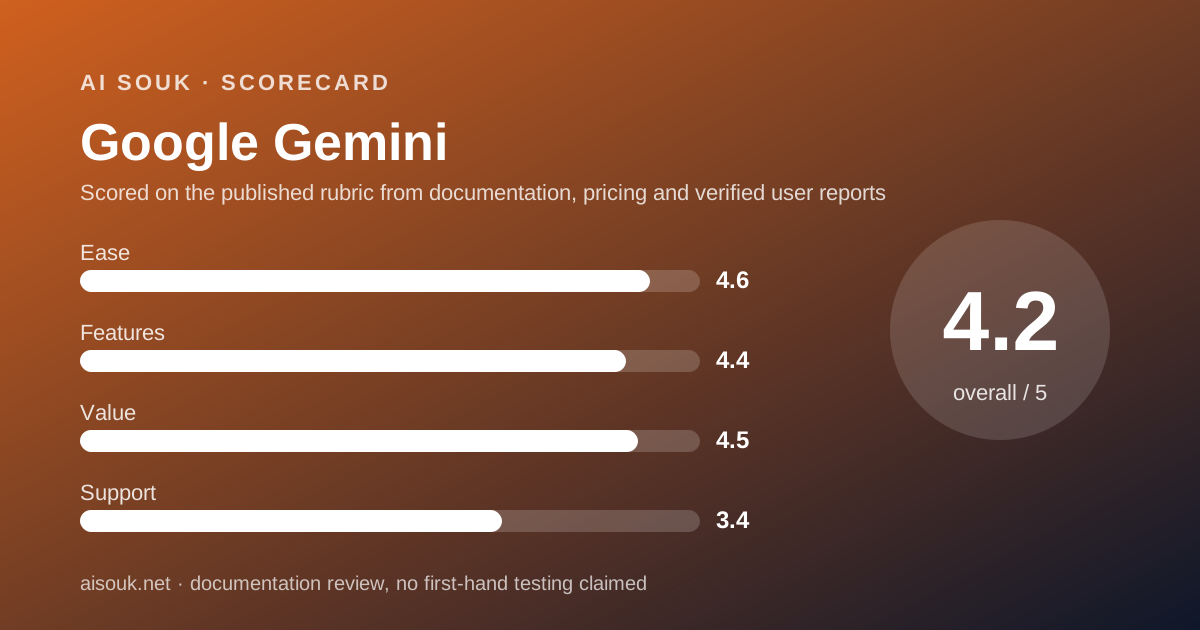
The ease score is high because a Google account is all it takes. Features is the strongest in the batch on free. Value is the highest here because of the $4.99 rung and the storage bundle, not because the free quantity is known. Support is self-service through general Google help, which is the lowest grade in the batch.
The practical advice: if your business runs on Google, start on free after October 9, 2026, read the usage-limits article that day, set Keep Activity deliberately, and treat Plus at $4.99 as the default upgrade rather than Pro at $19.99 unless you specifically need the Pro model or Gmail-and-Docs integration.
What this page cannot tell you: what the interface looks like today, which model a free account actually gets this week, how far the compute budget stretches, or whether the subscriptions page has changed since October 7, 2026. No account was opened and no screenshots were captured.
Visit Google Gemini
We have no affiliate relationship with this vendor. Link goes to the official site.