 AI
AIHow AI Souk grades a free tier
Every review on this site carries four scores and a badge that says DOCUMENTATION REVIEW. This note explains both. The scores grade one narrow thing, how far a free plan goes for someone doing real work, and they are built from the vendor's own pricing pages, help centres, policies and terms rather than from an account this site opened. That is a limitation, it is stated on every page, and this is the long version of why it is there and what will change it.
Why every page says 'documentation review'
The first sentence of every verdict on this site says that no account was opened for the page and no screenshots were captured, so nothing on it is a first-hand claim about what the interface looks like today. That is not modesty. It is the only honest description of how the 22 current reviews were produced. Each one was written from the official pricing page, one or more help-centre or FAQ articles, the privacy policy or terms where reachable, the vendor's own changelog or blog posts where the pricing page was not reachable, and public forum discussion treated as reports rather than facts. Every number carries the date it was checked, which for the current batch is October 7, 2026.
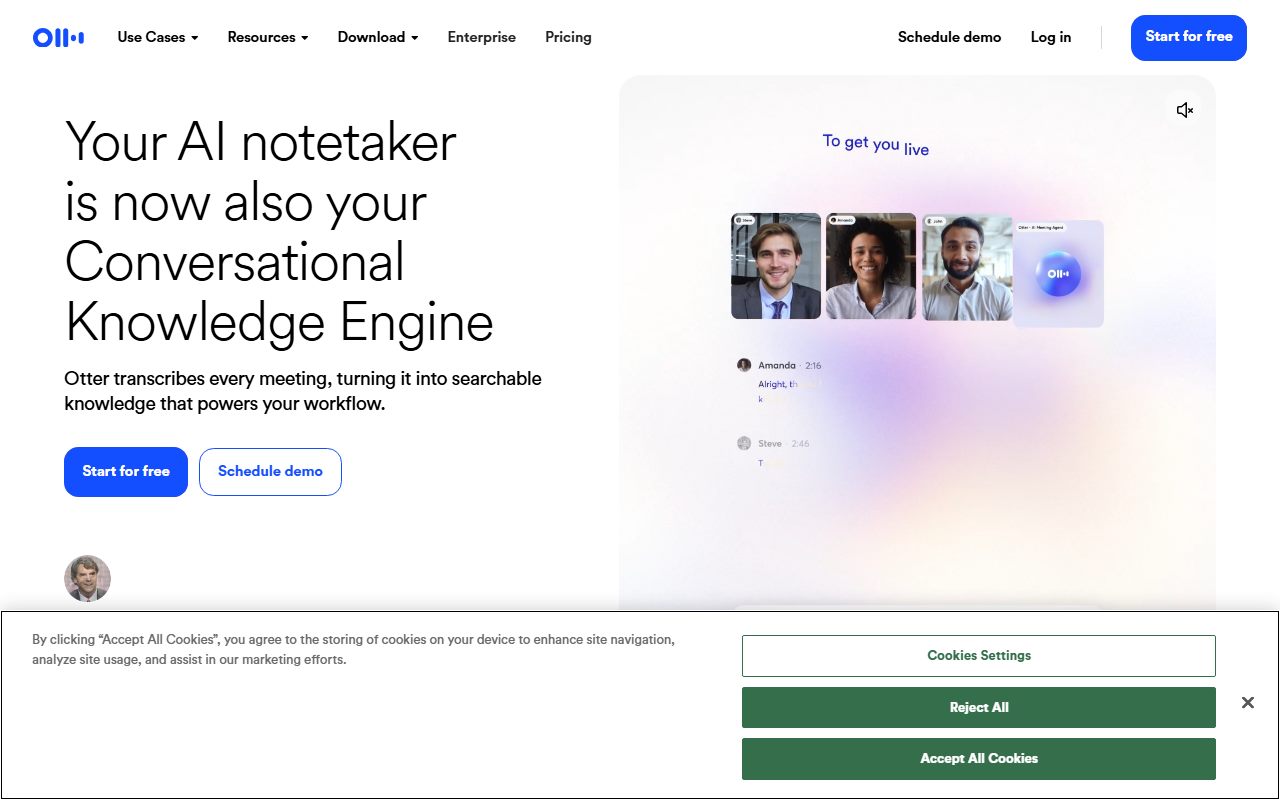
The alternative, writing as if someone here had spent weeks inside each product, would be a lie, and a specific kind of lie that this category is full of. Plenty of review sites describe interfaces they have never opened and quote limits they have never hit. This site would rather tell you what the document says and leave the walkthrough for when it can be done properly. The practical consequence is that a review here can tell you that Otter.ai's help centre caps free conversations at 30 minutes of transcript, and cannot tell you how accurate that transcript is on your audio. The first is documented; the second would be invented.
The four scores, one at a time
Each score runs from 1 to 5 with one decimal place, and each grades the free tier only. The paid tiers are described in every review but not scored, because the question this site exists to answer is whether the free plan is enough.
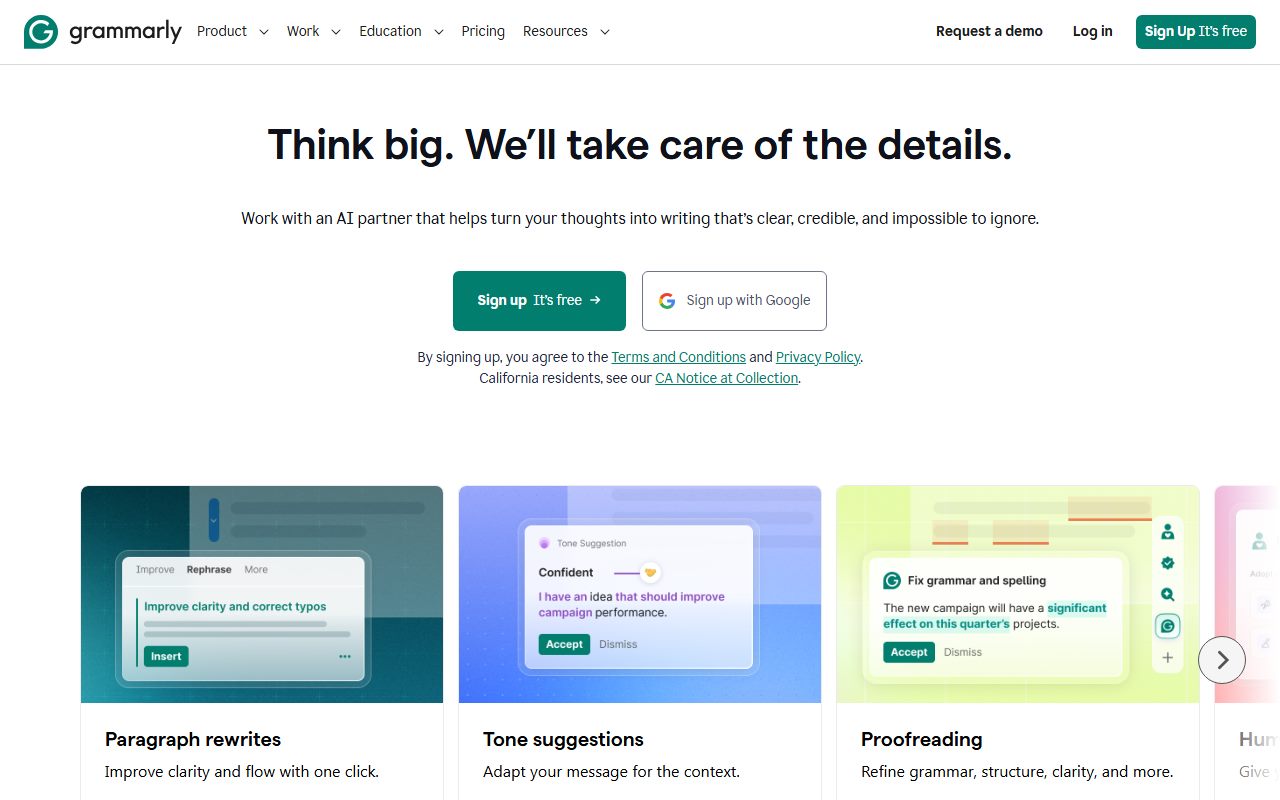
Ease asks how easy it is to start doing real work on the free plan: no card, no sign-in trap, no setup, the product appearing where you already work. Grammarly scores 4.7 because the correction layer runs in the browser, desktop, keyboard and office apps with nothing to learn. Perplexity and ChatGPT score 4.7 because the core behaviour is available the moment you arrive. Runway scores 3.9 because a one-time deposit of 125 credits means the first mistake costs half the trial.
Features asks how much of the product's real work the free plan can do, as opposed to demonstrate. Google Gemini scores 4.4 because Deep Research, image generation, Live, Canvas and Gems are all listed on the free tier. Claude scores 4.2 because web search, file creation, code execution, Artifacts and five projects are on the free plan. Runway scores 3.2 because two five-second clips is a test, not a workflow. Canva scores 3.4 because twenty pooled uses is a demo-sized allowance and the Ultra tools are locked out entirely.
Value asks whether the free plan is worth having next to the cheapest paid tier, and whether the vendor publishes enough to plan with. Leonardo.Ai scores 4.5 because 150 tokens a day with a published cost table is the most plannable free budget in the batch. Gemini scores 4.5 because the first paid step is $4.99. Runway scores 3.0 because the free deposit cannot sustain any ongoing use and free users cannot buy credits. Cursor scores 3.2 because the free limit is unpublished and the vendor's own guidance implies a daily agent user on the $20 plan should expect to spend $60 to $100.
Support asks what a free user gets when something goes wrong: documentation quality, a status page, a reachable help centre, a channel. Adobe Firefly scores 4.0 because its help documentation is extensive and the plans page states plainly how credits reset. NotebookLM scores 3.2 and tl;dv 3.3 because support is self-service and the documentation is thinner, or in tl;dv's case the pricing page itself was unreachable on the day of checking. Documented privacy controls count here too, because a toggle you can find is support of a kind.
What the scores are not
They are not a grade of output quality. No score on this site says whether a Suno song sounds good, whether an Ideogram image renders text correctly on the third try, or whether Fireflies transcribes your accent. Those are first-hand judgements, and this site has not made them. Where public forums report a pattern consistent with the documentation, the review says so and says it is unverified.
They are not a ranking by commission. At the time of writing, no review on this site carries an affiliate link; the field exists in every review and is empty. When affiliate relationships arrive, the method page will say so, and the rule already written there will apply: no product moves up a score because it pays more.
And they are not permanent. A score is a snapshot of the free tier as documented on a date. Gemini's free model line was documented two ways on October 7, 2026, with a change taking effect on October 9. Mistral Le Chat renamed itself in August and merged its modes in September. Fireflies.ai's help centre says its free-plan credit rules apply only to accounts created on or after September 1, 2026. Any of those is enough to change a score, and the reviews will be re-checked rather than left to age.
The rules the editors work under
- No first-hand claims. No sentence on this site describes a test session, because there was none. The permitted forms are 'the pricing page states', 'per the help centre', 'users on public forums report'.
- Every number has a source and a date. If the vendor does not publish a number, the review says the vendor does not publish it, and does not borrow one from a third-party guide.
- When the vendor's own documents disagree, the review reports both and says which it treats as current, rather than picking the flattering one.
- Cons must be specific and sourced. 'Support is weak' is not a con; 'chat and email support is listed as a Pro feature' is.
- Prices are described as a snapshot and the reader is sent to the live page. Everything on this site is 'as of October 2026' until re-checked.
- Length follows the job: a review runs 1,600 to 2,200 words because that is what it takes to cover the free tier, the paywall, the limits, the data terms and the alternatives without padding.
When the documents do not agree
This happens often enough to have a rule. Otter's pricing page says five recent conversations on Free; a 2023 help article says 25. Grammarly's plans page says 2,000 Pro prompts; a support article says 1,000 for Premium. Adobe's current plans page describes daily-refreshing free generations; an older FAQ describes 25 credits expiring after a month. tl;dv's blog posts quote two Business prices. Claude's pricing page handles the question of a free quantity differently, by declining to give one.
There is no fixed message count.
That is how Anthropic's pricing page, checked October 7, 2026, describes the free allowance, with the explanation that usage depends on the complexity of what you ask. A review that quoted a message count from a forum would be more satisfying and less true. The rule, then: the newer document wins, the pricing page outranks a help article, the safer number is reported alongside the other, and the absence of a number is reported as an absence. The reader is told which is which so they can decide what to check.
When walkthroughs will replace documentation reviews
The badge will change when the method does. A walkthrough on this site will mean an account was opened under a disclosed sign-up route, on a named date, on a named tier, with screenshots captured and dated and the limits actually reached rather than read about. It will still not mean a fictional tester's long-term experience. It will mean a documented session with its own date, and the review will say what was done and what was not. The four scores may move when that happens, particularly ease and features, because the documentation sometimes describes a product better or worse than it behaves. Until then, every page keeps the DOCUMENTATION REVIEW badge, and the verdict keeps its first sentence.
Two things will not change. The privacy section will keep sending you to the policy for your tier, because a screenshot of a settings page is not a substitute for reading it. And the rule that a number without a date is worse than no number will stay, because it is the single most useful discipline this category lacks.
How to use the scores
- Read value first if you are deciding whether to sign up at all; it is the score that says whether the free plan is a product or a demonstration.
- Read features if you already know you will use the tool and want to know how much of it is free.
- Read ease if you are rolling a tool out to colleagues who will not read instructions.
- Read support if you are relying on the tool for anything time-sensitive, and treat a low score as a warning about documentation rather than about the product.
- Then read the section called 'Limits and what users report', because the score is a summary and the section is the evidence.
- Then check the date and open the live pricing page.
Bottom line
The four scores grade one thing: how far the free tier goes for real work, as documented by the vendor on a stated date. They do not grade quality, they are not shaped by commission, and they will be re-checked rather than left to age. The DOCUMENTATION REVIEW badge is a limitation and a promise at the same time; it says this site has not opened an account and will not pretend to have, and it will be replaced only by a walkthrough that says exactly what was done. The method page carries the rules in short form, the guides apply them across categories, and when to leave the free tier turns the scores into a decision.