 AI
AIPerplexity vs ChatGPT for research on the free tier: sources first, or draft first
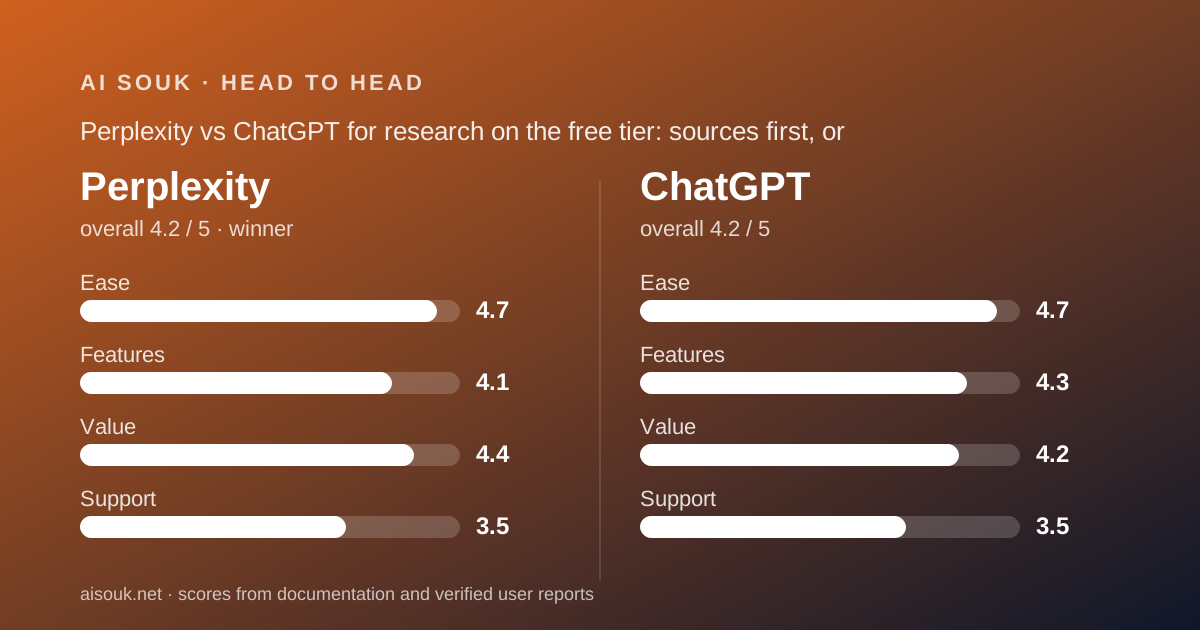
If the job is finding out what is true now and being able to show where it came from, this is the comparison to read. ChatGPT's free plan can search the web and run a limited number of deep research jobs; Perplexity's free plan is a search-then-cite engine by design, with practically unlimited basic searches, three Pro Searches a day and one Research query a month. Short answer: open Perplexity first for research you will have to defend, and ChatGPT for turning what you found into a draft. The reasoning, with the vendors' own numbers as of October 2026, follows.
 4.2Perplexity
 4.2ChatGPT
The short answer
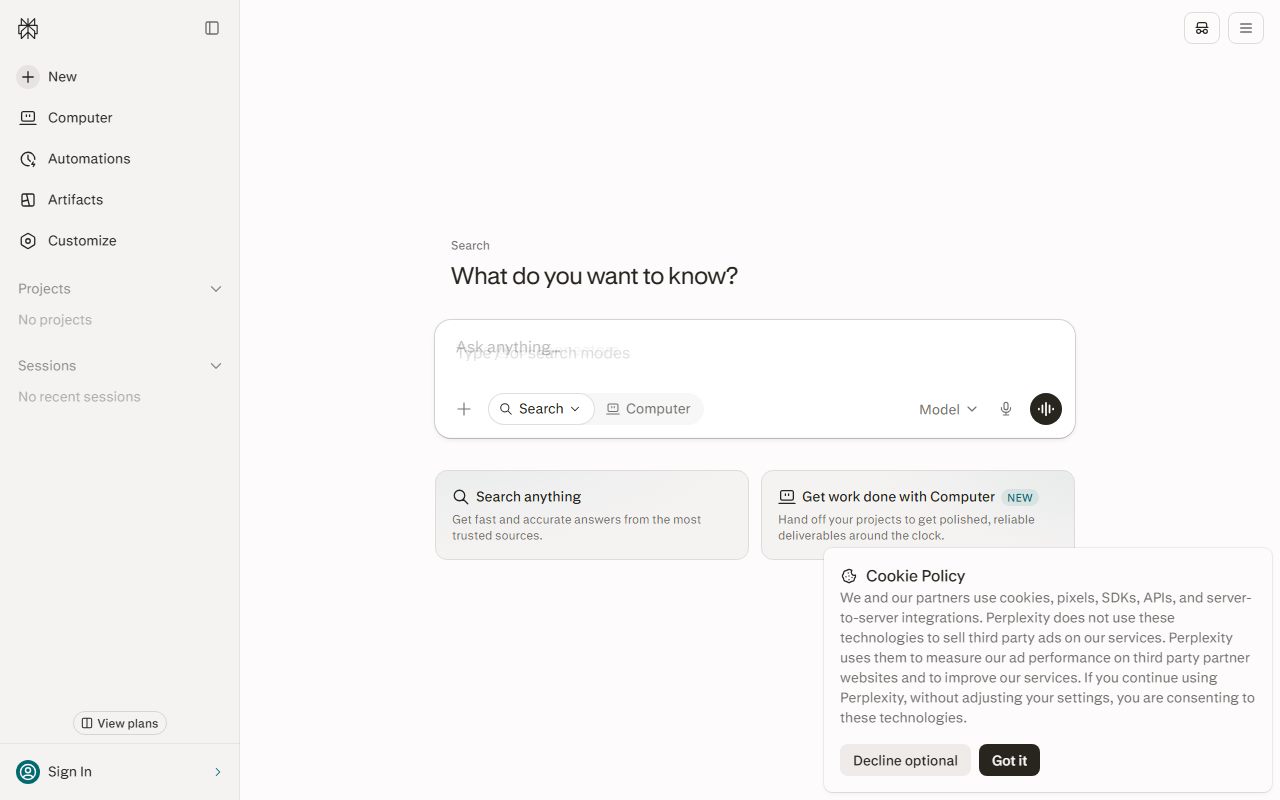
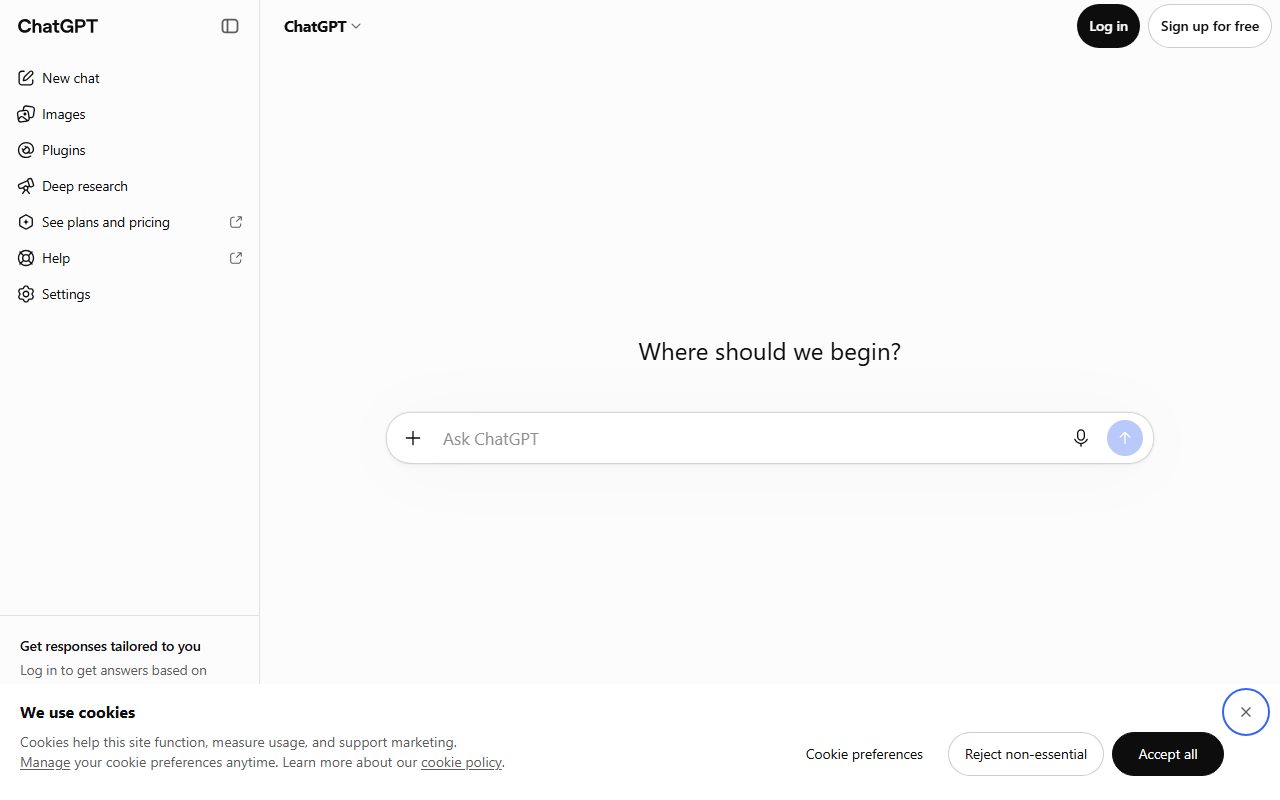
This is a documentation comparison. It uses Perplexity's help center plan comparison and data-collection articles and the Pro plan page, and OpenAI's pricing page, free tier FAQ and data controls FAQ, all checked October 7, 2026. No account was opened and no screenshots exist. The single-product pages are Perplexity and ChatGPT.
Perplexity wins the research question because its free tier contains the behaviour research needs: it searches, writes an answer and attaches the pages it drew on, so a claim can be traced rather than trusted. The help center describes the free Standard plan as practically unlimited basic searches, with the heavier modes rationed to three Pro Searches a day and one Research query a month. ChatGPT's free plan has web search and a limited amount of deep research, but its unmetered promise is plain text chat, and the pricing page uses the word limited for deep research without a number.
ChatGPT wins the second half of the research job, which is doing something with the findings. Unlimited free text means you can draft, restructure and rewrite without counting; Perplexity's own documentation positions it as an answer engine, and this site's review describes it as weaker than a dedicated assistant for long-form drafting. The sensible arrangement for a small business is both, with a clear division of labour, and this page explains where the line falls.
What each free tier includes (as of October 2026)
Perplexity's help center article on choosing a plan, last modified October 3, 2026, describes the free Standard plan as: search history access, practically unlimited basic searches, a very limited amount of Pro Searches, the vendor picking the best model for your query, basic file uploads (limited), and no access to advanced AI models, image generation or premium support. The comparison table in the same article gives the numbers: Pro Searches 3 a day, Research queries 1 a month, browser agent queries none, advanced models no, image generation no, file and app creation no, file uploads limited, support basic.
OpenAI's pricing page, checked the same day, lists unlimited text chats with the default model, GPT-5.6 Luna, subject to abuse guardrails, then seven limited lines: messages with uploads, image creation, voice chats, deep research, memory and context, Codex access and ChatGPT Work on desktop. The free tier FAQ confirms web search, data analysis, file and image uploads, image generation, use of existing GPTs and 500 MB of storage, and notes that ads may appear in some regions.
For research specifically, the inclusions line up like this. Both free plans search the web. Perplexity shows sources on every answer by design; ChatGPT's search mode can cite, but citation is not the product's organising principle. Both ration their deep research modes: Perplexity to one query a month, stated as a number; ChatGPT to limited, not stated. Perplexity's free plan has no advanced models and no image generation; ChatGPT's free plan has the default model with images capped. Uploads are limited on both, without numbers on either.
Daily limits and what happens when you hit them
Perplexity publishes the shape and most of the size. Basic searches are practically unlimited, which is the vendor's phrase and should be read as subject to fair use rather than as a guarantee. Pro Search, the multi-step mode, is three a day on free; Research, the long-report mode, is one a month. The Pro help article says the Best mode, which picks a model automatically for quick searches, is available without quota limits, and that access to advanced models may be limited during weeks of heavy usage even for paying users. What happens at the free Pro Search cap is not spelled out beyond the number; the reasonable reading is that the mode becomes unavailable until the next day, and the basic mode continues.
OpenAI publishes the mechanism and none of the sizes. Each capped tool has its own rate limit, you are notified when you reach it, and that tool pauses until reset with the timing shown in the app. Deep research is one of those tools. Plain text chat does not run out. The FAQ states that the default model and limits can change over time, which public forum discussion confirms from the user side: caps arrive sooner than expected on busy days and appear to shift.
The research consequence is that on Perplexity you can budget: three heavy searches a day and one monthly report, with unlimited light ones. On ChatGPT you cannot budget deep research, but you can run an unlimited number of ordinary searches inside chat and never lose the ability to write. A researcher who needs a dozen sourced answers a day will find Perplexity's basic mode does most of that without touching the Pro cap; a researcher who needs long autonomous reports every week will exhaust both free plans and should read the paid section.
Quality of output for everyday work
Output quality cannot be graded from documentation. What the documents support is a statement about the kind of output each is built to produce.
Perplexity's output is an answer with numbered references attached. The single most important limitation, which this site's review gives its own section, is that a citation shows where a sentence came from and not that the source is correct, current or representative; the engine will cite a marketing page or a stale forum post with the same confident formatting as a regulator's document. The skill is to open the citations that matter. On free, the model is chosen for you and the advanced models are unavailable, so the depth of reasoning is whatever the default delivers.
ChatGPT's output is prose, and for research that is both the strength and the hazard. It can take a messy set of findings and produce a clean briefing, a comparison table or a draft memo, unlimited, on the default model. But the default model answers from training when it does not search, which means it is fluent about the past and unreliable about the present, and when it is wrong it is wrong fluently. Its search mode mitigates this; its deep research mode, capped on free, is the closest it gets to Perplexity's behaviour.
Public reports are consistent with the documents: Perplexity users praise traceability and complain about weak sources being cited as readily as strong ones; ChatGPT users praise drafting and complain about confident errors on current facts. Neither is a reason to avoid the product; both are reasons to use each for what it is built for.
Privacy and training defaults
Both vendors train on consumer data by default and both offer an opt-out, with one difference in how it is presented.
Perplexity's help center article on data collection, last modified September 3, 2026, states that for Free, Pro and Max users, AI Data Retention is enabled by default, and gives the path to turn it off: account settings, Preferences, the AI data retention toggle. It adds three cautions: opt-outs apply only to data collected after the opt-out date, previously collected training data cannot be deleted, and opting out does not stop processing for service operation, legal compliance and product improvement. The plan comparison table lists free data privacy as Standard and describes the paid individual tiers as opt-out AI training available, which reads as though the toggle is a paid feature, while the data collection article says free users have it too. This page reports both and cannot resolve them; check your own settings page. Enterprise data is never used for training, per the same article.
OpenAI's data controls FAQ states that consumer conversations can be used for training, names the Improve the model for everyone setting that stops new conversations being used when turned off, and describes Temporary Chat, which is excluded from training and from history but may be retained up to 30 days for safety. Business and Enterprise content is excluded by default.
For research work the practical difference is small: on both, the queries themselves are disclosures, and a search for a competitor's unreleased product or a client's legal exposure has left your building either way. Visit the toggle on both, use ChatGPT's temporary mode for sensitive questions, and note that Perplexity's documentation says past training data cannot be unwound after the fact.
Price of the first paid step
Perplexity's Pro page, checked October 7, 2026, shows Pro at $17 a month or equivalent when billed annually, and Max at $167 a month billed annually; the monthly-billing rates are shown at checkout rather than in the page text retrieved, and the help center lists an Education Pro plan at $10 a month with student or educator verification. The help center describes Pro as extended access to Pro Search with weekly limits, monthly limits on Research and on file and app creation, access to advanced models, image and video generation, increased upload limits, up to 50 file uploads per project and priority support. The Pro page adds 4,000 bonus credits and deep research.
OpenAI's pricing page lists Go at $8 a month, Plus at $20 and Pro from $100. Go loosens the free caps, more uploads, images, voice and memory, without the reasoning models; Plus adds the GPT-6 reasoning models, expanded deep research, projects, scheduled tasks and custom GPTs. For research the relevant step is Plus, because that is where expanded deep research lives; Go's description does not mention it.
So the first paid step that actually buys more research is $17 a month annually on Perplexity against $20 on ChatGPT Plus, and what they buy is different: Perplexity's step lifts the Pro Search and Research caps and unlocks advanced models inside a search engine; ChatGPT's step lifts deep research and adds projects inside an assistant. If your research ends in a report you must write, Plus does more of the job; if it ends in a set of answers you must defend, Perplexity Pro does. Check both pages; the help center's billing FAQ notes Perplexity does not offer subscription pausing, and both vendors change prices.
Pick this one if…
Pick Perplexity if you will have to repeat a figure in a meeting. A cited answer with a link you can open beats a fluent paragraph you cannot verify, and the free tier gives you that behaviour without limit on basic searches.
Pick Perplexity if your questions are about now: prices, rules in force this year, what a competitor announced last week. Those are the questions where an assistant's training-data answer is most confidently wrong.
Pick ChatGPT if the research must become a document. Unlimited free text means the briefing, the comparison and the summary cost nothing to produce and reproduce.
Pick ChatGPT if you also need images, voice or data analysis on the same free account. Perplexity's free plan lists none of them.
Pick both if you run a small business and the budget is zero. Research in Perplexity, open the sources that matter, paste the verified findings into ChatGPT, draft. That division costs nothing and uses each free tier for the thing its vendor built it to do.
Frequently asked
Is three Pro Searches a day enough? For most small-business research, yes, because the basic mode handles the ordinary questions and the Pro mode is for multi-step ones. It is not enough for someone whose job is research all day, and the one Research query a month is a sample rather than an allowance. The help center's own guidance says to choose Free if you are a light user or need occasional answers.
Does ChatGPT's free search cite sources like Perplexity? It can show sources when it searches, but the pricing page does not make citation a feature of the free plan, and the product's organising behaviour is answering, not retrieving. Treat any uncited ChatGPT claim about the present as unverified, and ask it to search when currency matters.
What about Google's option? Gemini lists Deep Research on its free plan with daily request caps, which makes it the third candidate for free research work and the only one of the three that documents a free long-report mode as more than one a month; and NotebookLM is the right tool when the research material is a set of documents you already have rather than the open web.
Visit Perplexity
We have no affiliate relationship with this vendor. Link goes to the official site.
Visit ChatGPT
We have no affiliate relationship with this vendor. Link goes to the official site.